
Why specifications matter more than photos
Two built-in foldable beds can look identical in a product photograph and behave completely differently after eighteen months of daily folding. The difference is almost never in the design — it is in four material decisions that buyers rarely see on a quotation.
This article walks through those four decisions using the real specifications of a wall-mounted four-fold bed with a side covering screen, so you can read any supplier's spec sheet with a critical eye.
1. Steel: pipe grade and wall thickness
Steel is where most of the cost and nearly all of the durability lives. A specification worth taking seriously looks like this:
- 195 national standard steel pipe for the main structure — uniform wall thickness and a smooth surface, which matters because inconsistent thickness is where cracking starts.
- 140 × 40 × 1.0 mm profile for the foot frame. The foot frame carries the entire dynamic load every time someone sits down, so undersizing here is the most common failure point.
- 2.0 mm flat iron welding at all connection positions. This is the single most under-specified number in the category. A 2.0 mm welded joint behaves very differently from a 1.2 mm tack weld under repeated stress.
- 30 × 15 × 1.0 mm flat pipe for the main frame, with 20 × 10 × 1.0 mm square pipe for the movable connection brackets of the chassis.
- 1.5 mm and 2.5 mm ultra-thick steel pipe on the round tubes that carry the universal wheels — the pivot point that takes the most concentrated load.
When a supplier quotes only "strong steel frame," ask for the pipe dimensions and the weld thickness at connection points. A supplier who knows their product will answer immediately.
2. The clamping board: why E1 grade and pre-installed T-nuts matter
Inside the frame sits the bed platform board. Two details separate a good board from a cheap one:
9 mm thick E1 level environmentally friendly board. E1 is the formaldehyde emission class, and for furniture used in enclosed offices and hospital rooms it is not a marketing detail — it is a specification that affects air quality in the room where the bed is deployed.
Pre-installed T-nuts instead of self-drilling screws. This is a detail that reflects how the supplier thinks about the customer's installation team. Self-drilling screws bite into the board material and are the most common cause of loosening and creaking after a few months of use. Pre-installed T-nuts distribute the load through a metal thread and are effectively maintenance-free.
3. Foam: density is the number that matters
Foam is sold by many adjectives and only one useful number. 40 density environmentally friendly high-rebound foam is a specification you can hold a supplier to; "high quality foam" is not.
Density determines how the mattress behaves after hundreds of compression cycles. Low-density foam feels fine on day one and develops a permanent depression within a season. For a nap bed used every working day, density is the difference between a two-year and a ten-year mattress.
4. Surface treatment: what keeps the finish intact
A powder coating is only as good as the preparation underneath it. Acid washing and phosphating treatment followed by electrostatic spraying gives the coating good adhesion, so the colour stays bright and lasts. Skip the phosphating stage and the coating chips at the corners within months — precisely where a folding bed makes contact with the floor and the cabinet.
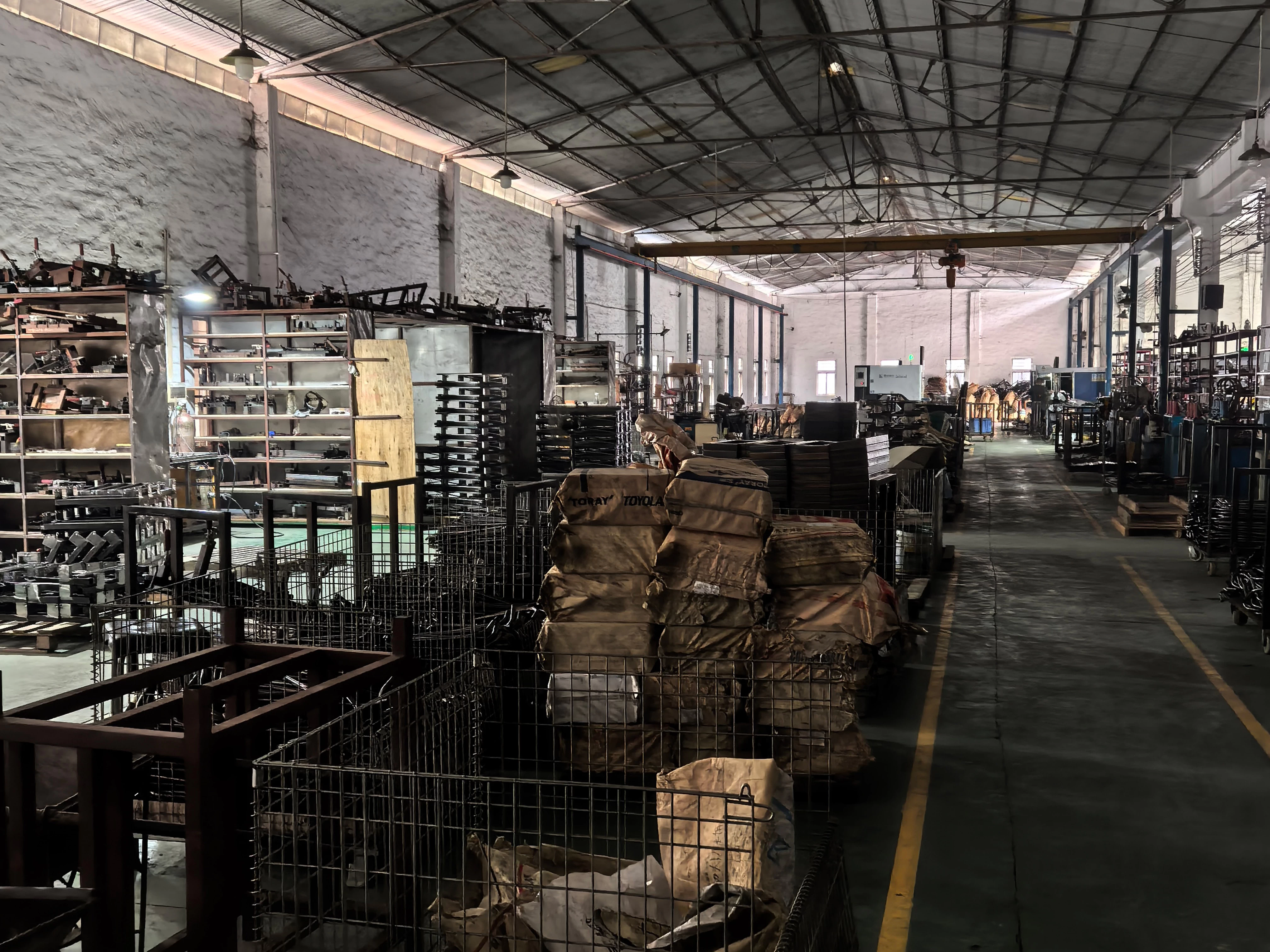
The manufacturing process behind these numbers is also worth asking about. Laser cutting and robotic arm welding produce dimensionally accurate parts and consistent, clean weld seams — which is why the finished bed folds with the alignment you expect rather than needing a shove.
Reading a quotation like an engineer
Take any quotation for a built-in foldable bed and map it against five questions:
- What steel pipe dimensions are used, and how thick is the weld at connection points?
- What board grade and thickness sits inside the frame, and are the fasteners self-drilling or pre-installed T-nuts?
- What is the foam density, stated as a number?
- Is the frame phosphated before coating?
- Are parts laser cut and robot welded, or fabricated by hand?
A supplier who can answer all five is a supplier you can build a long-term programme with. If the answers are vague, the price difference you are being offered is probably the wall thickness and the phosphating bath.
The summary
Built-in foldable beds are not a commodity differentiated by appearance. They are differentiated by steel grade and weld thickness, board emission class and fastener design, foam density, and surface preparation. Specifying these four items explicitly in your purchase order is the cheapest quality assurance available — it costs nothing and removes the ambiguity that low-cost suppliers rely on.